
POINT OF SALE • TECHNOLOGY BRIEF • JUNE 2026
Sell Without Stopping, The Case for Offline-First POS
Modern retail doesn’t wait for a Wi-Fi signal. An offline-first point-of-sale system keeps your business running and syncs everything the moment the internet returns.
Every business owner knows the feeling: a customer is at the counter, card in hand, and the internet goes down. With a traditional, cloud-only POS, the entire transaction grinds to a halt. Sales are lost. Queues build up. Trust erodes. Offline-first POS was built to make that scenario a thing of the past.
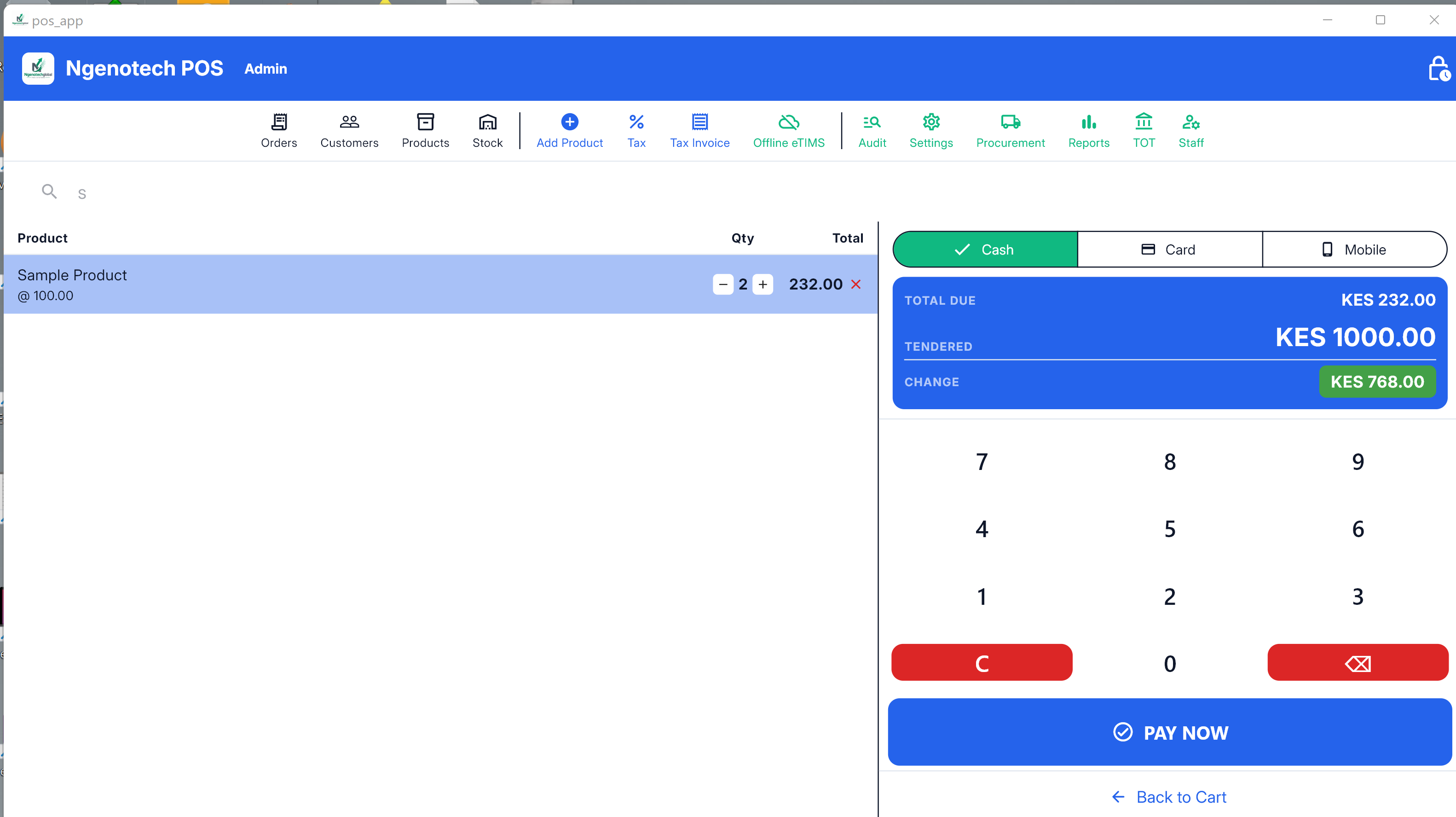
An offline-first point-of-sale system operates from a local database stored directly on the device be it a tablet, desktop, or dedicated terminal. All transactions, inventory lookups, and receipt printing work completely independently of an internet connection. The cloud is a destination, not a dependency.
Why Connectivity Can’t Be Assumed
Whether you’re running a retail shop in a building with spotty Wi-Fi, a market stall in an open field, or a restaurant during peak hours when every byte of bandwidth is contested, your internet connection is never guaranteed to be stable. Power outages, ISP failures, router faults, and mobile data dead zones are everyday realities not edge cases.
Cloud-dependent POS systems treat connectivity as a precondition. Offline-first systems treat it as a bonus. The difference in business continuity is enormous.
43% of SMBS lose sales to POS downtime at least once per year
< 1second transaction time on local storage no network round-trip
100% of sales captured offline, synced automatically when online
How It Works
The architecture is straightforward but powerful. At its core is a local database that lives on the POS device itself. Every sale, refund, product lookup, and stock movement writes to this local store first instantly and reliably.
1. A sale is made. It is written immediately to the local database on the device. The cashier sees a confirmation in under a second.
2. If internet is available, the transaction is simultaneously pushed to the cloud in the background invisible to the user.
3. If internet is not available, the transaction is queued locally. Business continues without interruption.
4. The moment connectivity is restored, the sync engine detects it and begins uploading all queued transactions automatically.
5. The cloud receives the full record: every sale, every stock change, every session — nothing is lost, nothing is duplicated.“Te cloud is where your data lives long-term. The device is where your business lives right now. Offline-first respects that difference.
The Sync Engine Where the Magic Happens
The most critical component of an offline-first system is the synchronisation layer. When connectivity returns, this engine must solve a deceptively hard problem: merging local changes with the cloud without creating duplicates, losing records, or creating conflicts.
Good sync engines use timestamped records, unique transaction IDs, and conflict-resolution rules to handle edge cases — such as when a product’s stock is updated both on the device and in the cloud during an offline window. Key technologies involved include:
Local SQLite / IndexedDB for device-side storage
Cloud Sync API for upstream delivery
Conflict resolution logic to reconcile divergent states
Queue management to ensure no transaction is skipped
Delta sync to send only changed records, reducing bandwidth
Business Benefits Beyond Uptime
The most obvious advantage is uninterrupted sales but offline-first POS delivers more than that. Because transactions are written locally first, they are faster by design. There is no network round-trip on every sale, which means checkout lines move faster even when the internet is working perfectly.
Security posture improves too. Sensitive transaction data doesn’t travel over the network in real time for every swipe. It accumulates locally and syncs in batches or streams over encrypted channels, reducing exposure windows.
For business owners, the cloud becomes a powerful back-office layer: real-time dashboards once connectivity is present, multi-location stock visibility, remote reporting, and centralised product catalogue management all without any of these features blocking a sale.
Built for the Real World
Offline-first is not a workaround. It is the correct default architecture for any POS system that operates in the physical world. Connectivity will always be imperfect. Customer impatience will always be constant. Business owners need tools that match that reality systems that are resilient by design, not by accident.
When the internet comes back, your data follows silently, automatically, and completely. Until then, you sell. That is exactly how it should be.